- Worship Strategies
- Posts
- Here's the Basic Cost of Starting a Praise Band
Here's the Basic Cost of Starting a Praise Band
By Worship Strategies

Derek Volkmann
February 07, 2026
In partnership with

Worship Strategies is involved in some really cool start-ups right now, and one of those is building a youth praise band from the ground up at a local church in mid-MO.
This, along with installing sound systems for other local churches, got me thinking:
What if church leaders and volunteers could have a total break-down of what it costs to start a praise band, from instruments to gear—everything?
So, I put something together that should get you started on the right path.
But first, take a look at this resource below; simply clicking on the lick helps our ministry tremendously!
Not Conservative. Not Liberal. Just Christian.
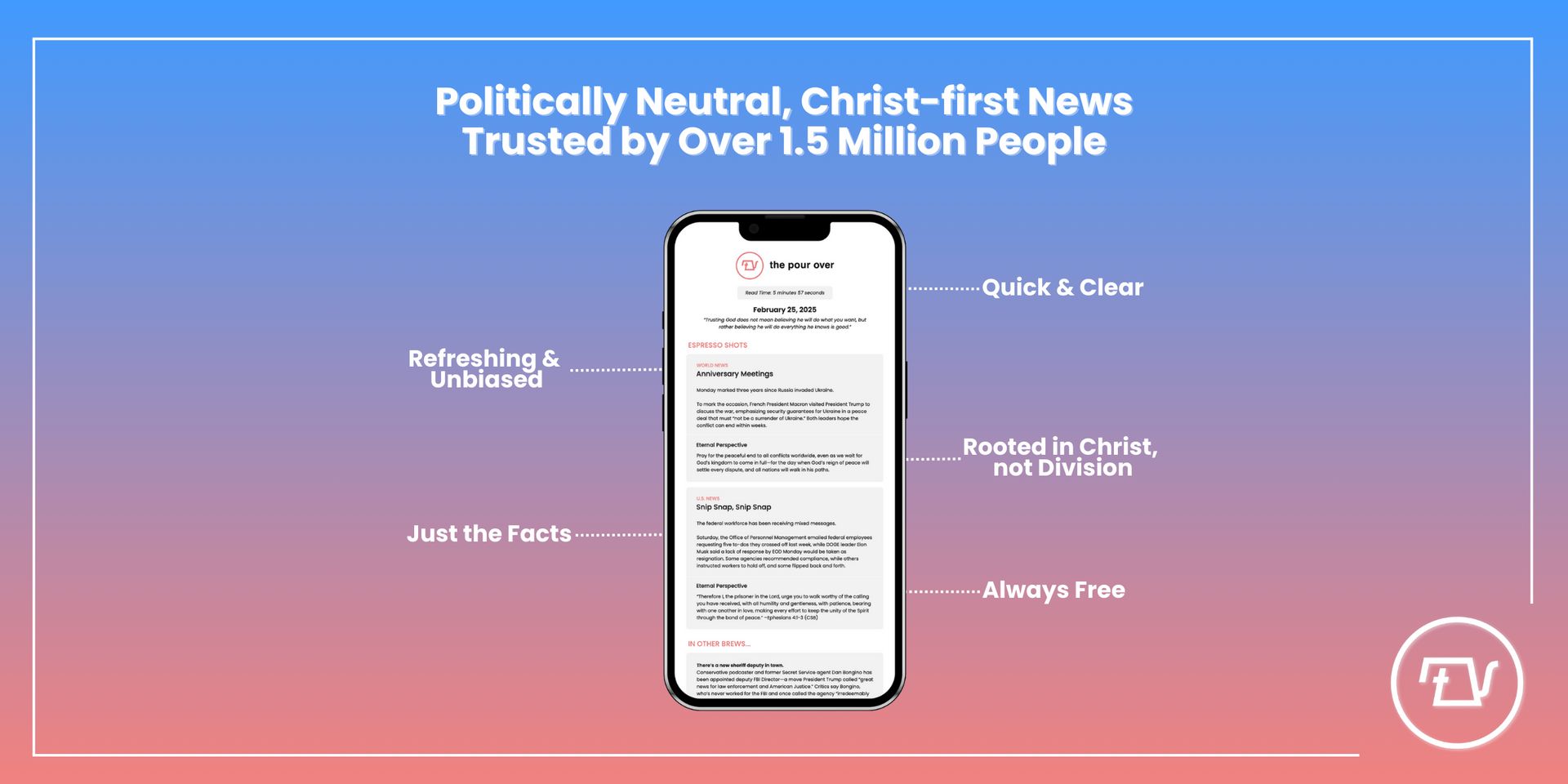
The world feels chaotic, but your news source doesn’t have to.
You can hide under a rock or spiral into the chaos… or you can subscribe to The Pour Over and get the news you need to know and the peace you crave.
Every Monday, Wednesday, and Friday, The Pour Over sends quick news summaries that are actually fun to read. Plus, each newsletter includes short biblical reminders to help you stay focused on Christ and eternity. Instead of fueling outrage or anxiety, the news becomes another prompt to rest in God and respond in faith.
Over 1.5 million Christians have ditched the doomscroll and found a better way to stay informed––Christ-first, anger-free, and (even kinda) funny.
Try it for free and check out their welcome email that’ll make you glad you did!
Defining the Goal
Before you start buying a bunch of gear, ask yourself this question:
What are my goals?
These goals have to be considered in context of your worship space, the number of capable volunteers (or those who are eager and able to learn), and where you get the most bang-for-your-buck (especially if your budget is limited).
I’ll categorize each element into the following:
Essential: The non-negotiables for generating and amplifying sound, along with instruments to support the music.
Integral: These features play a near-fundamental role in the set-up; you must incorporate these to some degree, but they may be swapped out in favor of others that might be a better fit.
Supplemental: These elements accentuate the basic set-up, but can be removed if budget and personnel limitations are a factor.
Since many of you reading this are coming from churches that average around 100 people or less that attend your weekly gatherings, we’ll be making recommendations based on those parameters, going from a stripped-down, “acoustic” set-up to a 5-piece band.
The Essentials
A basic sound system is non-negotiable for filling out a room with a pleasing, balanced audio experience. With that, you typically need the following items:
Main speakers (2)
Stage monitors (at least 2)
Mixer
Power amp (2-channel)
Microphones (at least 2)
Wires/cables to connect speakers, instruments, microphones, etc.
Your praise band’s instrumentation will determine the kind of mixer you need to purchase; these units often come in anywhere from 4 to 30+ channels. My rule of thumb is to buy a unit that has a few extra channels more than what you need, in case you experience growth on the team.
These essential components should last you a long time if they’re cared for and managed well. If you can invest the money, bring in a specialist who can calibrate your sound system to a base line that you can “set and forget.”
In regards to instruments, there’s some overlap with what I call the “integral.” Basically, you need at least one chordal instrument (piano/keyboard or guitar) that can accompany singers to outline harmony and register.
The Integral
This mainly comes down to instrument types to support basic worship in music—especially if you want to incorporate distinct, percussive elements that characterize a modern worship sound. These elements can be swapped or reduced to the basic set-up of one chordal instrument, but you at least need a single chordal instrument to accompany singers. The following would be foundational to a stripped-down, “acoustic” set, assuming you have a minimum of one or two vocalists:
Piano/keyboard
Acoustic guitar
Cajon (the percussion “box”)
If your budget and space allows, you can incorporate these players, too:
Bass (could be bass guitar or another keyboard synthesizer)
Drumset (replaces cajon)
These two instruments can stray into the “supplemental,” but if you’re going for a more fleshed-out band, then having a bass and full drumset are integral for providing a foundation upon which the rest of the band sets.
In regards to other gear, getting a dedicated subwoofer REALLY helps add a solid layer of low end to your overall sound. This way, you can split the frequencies going out from the mixing board to a dedicated “lows” source (the subwoofer) and “mids + highs” source (main speakers).
The Supplemental
These features are the “icing” on the cake—they accentuate the experience to the point where they can eventually feel “integral,” but ultimately, they’re the first to be cut—especially for spaces designed for a 100 or so people.
This is because from a tonal/timbre perspective, they don’t play a foundational role like the “essentials” and “integrals.” They add color and depth to the sound of the band, but you’re better off prioritizing the essential and integral elements if your budget and personnel are limited.
Electric guitar
Auxiliary keyboards
Auxiliary percussion
Regarding other gear, you can further optimize the overall sound and function of the stage by eliminating wedge monitors and microphone cables, but the up-front cost is higher.
Upgraded/specialty microphones (wireless handhelds & headsets)
In-ear monitor system (eliminates need for floor wedges and reduces overall stage volume and unwanted sound reflections from a back wall)
Pricing Things Out
Now that you know what’s essential, integral, and supplemental, let’s dig into some pricing to give you a better idea of costs and goals to meet. You can use this for a budget proposal or a reference point for your volunteers if they would like to purchase gear for themselves.
Essentials
Main speakers: Decent models will start just above $400. Here’s a great model that your church can “grow” into.
Monitors: Prices range quite a bit, but basic models start between $200–$300, like this model.
Power amp: Pricing starts just above $500 for a decent model. Here’s one I’ve recommended and currently use.
Mixer: Surprisingly, you can get a decent mixer with cool features for a relatively small price compared to other gear, going for less than $200! Here’s a model that has eight channels plus bluetooth connection.
Microphones: For wired mics, I almost always default to the classic Shure SM58, just over $100.
Integrals
Electric piano/keyboard: Easily one of the more expensive items on the list, but worth the investment. You’ll spend anywhere from $1200–$3000 on a new instrument, so the used market will be a worthwhile place to look. We use this instrument that sits on the low end of that price range.
Acoustic guitar: Decent, solid-wood instruments can be found at affordable prices. This guitar comes in just above $500, rivaling its US-made cousins at more than three times the price.
Cajon: This instrument is less than $150 on average. Check out this model and compare with others in various finishes and wood types.
Bass guitar: I would look for an instrument with two pickups to help sculpt your tone, rather than a single-pickup model. Here’s a great brand with solid hardware, is durable, and can be easily maintained.
Drumset: Drums can get pricey really quick, but a 4-piece shell kit (snare, 2 toms, and kick drum) along with a cymbal pack (hi-hats, 2 crashes, and a ride) will get you a lot of mileage; total pricing starts between $2000–$3000 altogether (brand-new). Here some quality shells and a video featuring various decent cymbal packs to get you started.
Supplementals
Electric guitar: Like the acoustic guitar and bass guitar, you don’t have to break the bank to get a reliable, great-sounding instrument, all for less than $1000. Here’s a favorite I’ve recommended over the years.
Amps/effects: For an absolute entry level for electric guitar players, I’ve been blown away by this little unit that plugs straight into your mixer, no amp needed—all for less than $200. For bass guitars, this DI is pro-level and doesn’t break the bank—right around $300.
Wireless microphones: These are pricey because of the transmitter/receiver components, but they REALLY help with stage clutter by eliminating cables. Here is the wireless version of the SM58 mentioned above, getting two mics for under $700 total.
In-ear monitor systems: At our church, I’ve opted for personal mixing stations that run a headphone line out. We use this system, but it also requires a mixer that sends an ultranet out into a power/audio distributor, plus additional personal mixing units for each band member, so it can get expensive. (For example, a 5-piece band would require about $2000 worth of in-ear monitor gear.)
For the uninitiated, these numbers and information can seem like a lot—both in terms of technical concepts and money. The thing, it really only goes up from there in terms of complexity and price. BUT—much of this pricing is based on brand-new gear; the used market will almost always reflect better pricing for tight budgets. (And don’t forget—many of the instruments can be purchased by your volunteers as personal investments.)
Be blessed 👊✌️
Derek is the founder and director of Worship Strategies and is also Creative Ministries Director Faith Family Church in Fayette, MO. Outside of ministry, he is active as a musician and entrepreneur. He is married to his wife Kaitlynn, and they have two beautiful daughters.
Want Our Help with Your Worship Ministry?
A big part of what we do at WORSHIP STRATEGIES is to help churches improve how they worship.
Practically, this looks like discipleship, leadership coaching, music instruction, and production advising to help your team grow and excel in their giftings to glorify God and edify His people.
The cool thing? We do this free of financial obligation for each church. We have a growing team of folks who support us in our work for YOU 🫵 and be a blessing to churches who need help but lack tangible resources for improvement.
If you’re interested in working with us, then just click the button below to get started.